- Home
- |
- Our Campaigns
- |
- MUP
- |
- Shooting down the myths
Shooting down the myths
MYTH It’s a tax on the poor.
FACT No, it’s not a tax and it doesn’t target the poor. It targets cheap, strong alcohol traditionally drunk by those who need the most help. Evidence shows that people on lower incomes are more likely to abstain.
MYTH Alcohol is already too expensive.
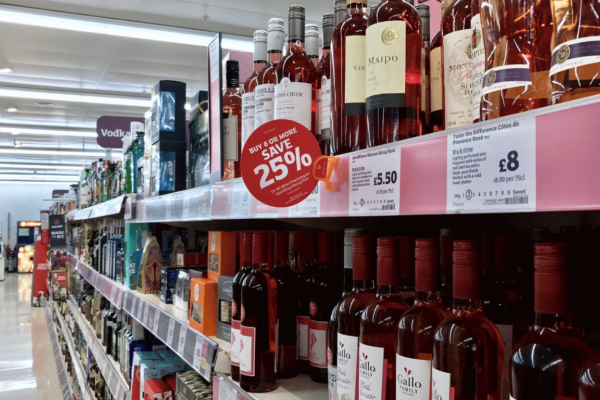
FACT This isn’t true. In 2011, alcohol was 45% more affordable than it was in 1980. It can kill, but in some places it’s cheaper than a bottle of water.
MYTH The responsible majority will be penalised for the minority who drink too much.
FACT The current policy of low alcohol prices means that responsible drinkers
are subsidising the behaviour of 25% of the population who are drinking at increasing and higher risk levels. This measure is targeted at helping vulnerable groups who need the most support, not the majority, who have nothing to fear. Under a minimum 50p per unit, moderate drinkers would pay just 28p extra a week.
MYTH If supermarkets make less through alcohol they’ll increase the price of other goods.
FACT No they won’t. If anything it will make them less expensive. Supermarkets use alcohol as a loss leader. As a consequence they have increased the price of non-alcoholic goods. Government is calling on supermarkets to reduce the price of other goods instead of using alcohol as a loss leader.
MYTH It’s the nanny state.
FACT It’s not the nanny state. When an industry’s actions or an individual’s choices ruin the lives of others, particularly vulnerable groups like children, it’s the duty of the state to intervene.
MYTH It won’t make a difference – people will consume the same amounts as they always have.
FACT Our culture hasn’t always been like this. We’re drinking twice as much as we did in the 1950s. In 2011, alcohol was 45% more affordable than it was in 1980. There is a clear association between affordability and consumption. It will make a difference. Research from Sheffield University found that a minimum price of 50p per unit of alcohol would reduce consumption:
- per drinker by 6.9% on average
- per 11-18-year-old drinker by 7.3%,
- per 18-24-year-old hazardous drinkers by 3%
- of harmful drinkers by 10.3%
- of moderate drinkers by 3.5%.
It's already working in other countries such as Canada. Introduced in 2010, key findings have suggested:
- A 10% increase in the minimum prices reduced total consumption by 8%
- Bigger increases in minimum prices for stronger drinks resulted in proportionately bigger reductions in consumption of those products
- A 10% increase in the minimum price of beer was associated with a 22% decrease in consumption of higher strength beer compared with an 8% reduction in lower strength beers
- An increase in the price of the cheapest, strongest alcohol was accompanied by a shift in consumer preferences towards lower alcohol content beer, wine and cocktails.
MYTH It’s illegal.
FACT Both UK competition law and EU free trade law allow for the setting of a minimum unit price for the retail sale of alcohol by a government or public authority for public health purposes. The EC treaty states that restrictions on the free movement of goods can be justified if implemented on the grounds of public policy and the protection of health. The European Court of Justice has accepted the right of member states to use pricing measures to control consumption and harm for public health objectives.
MYTH It will lead to a growth in the illegal alcohol trade.
FACT This is another industry excuse to do nothing. We can learn from our partners who work to tackle smoking problems. For example, despite fears cash strapped smokers would turn to illicit tobacco during the recession, the volume of illicit tobacco bought reduced by 39% in the North East between 2009 and 2011. This had an estimated saving of over £36m in lost duty and VAT evasion. Illicit trade is a threat to controlling the sale of alcohol and is already alive and well. According to the World Health Organisation, policing and control is the solution to illicit trade.
MYTH Europe doesn’t have a problem and alcohol’s cheaper. It’s culture, not price.
FACT It’s a myth that Europe does not have a problem with alcohol – Europe
has the highest drinking levels in the world. Affordability, availability and promotion of alcohol have created the alcohol culture we have today. We need to use the same levers to put the genie back in the bottle.
MYTH A minimum unit price will hurt my favourite pub.
FACT It won’t affect prices in the average community pub but it will close the gap between pub and supermarket prices. Around four in five publicans back a minimum unit price.
MYTH This is prohibition.
FACT It’s not about stopping people enjoying alcohol. Alcohol is a drug. It’s linked to more than 60 medical conditions and is the third biggest risk factor for disease and disability in the world. We can’t treat it like just another everyday household product like a tin of beans.
MYTH It will lead to job losses.
FACT Jobs are already being lost because small businesses such as pubs and
off licenses can’t compete with cheap supermarket prices. CAMRA estimates that 16 pubs a week are closing their doors. Many off licence chains have disappeared because they can’t compete with supermarket prices. Minimum unit price will help level the playing field meaning that drinking at home is no longer more attractive than going out and having a good time – which would clearly have a beneficial impact on the night time economy.
MYTH Dependent drinkers will turn to crime in order to feed their habit.
FACT Alcohol is already a major cause of crime. Almost half of all violent crime is alcohol related. We need to tackle this and a minimum unit price is an important part of the solution. We know there’s a clear link between affordability and consumption. We also know that a minimum unit price is not a silver bullet and those who turn to crime to feed an alcohol habit clearly also require treatment.
MYTH Scotland has already shelved plans for a minimum unit price – this is just a waste of time and money and is doomed to failure because it’s illegal.
FACT Plans to introduce a minimum unit price in Scotland have not been shelved, they have simply been delayed until legal proceedings are concluded. This was inevitable and is simply part of a process which began when the Scottish Government lodged its proposal. A legal challenge by the global alcohol industry was always expected. It was never going to give up financial gain without a fight, despite the overwhelming benefits to health and society. These are just stalling tactics – similar to those employed by the global tobacco industry.
The UK Government remains committed to the introduction of a minimum unit price. Both UK competition law and EU free trade law allow for the setting of a minimum unit price for the retail sale of alcohol by a government or public authority for public health purposes. The EC treaty states that restrictions on the free movement of goods can be justified if implemented on the grounds of public policy and the protection of health. The European Court of Justice has accepted the right of member states to use pricing measures to control consumption and harm for public health objectives.